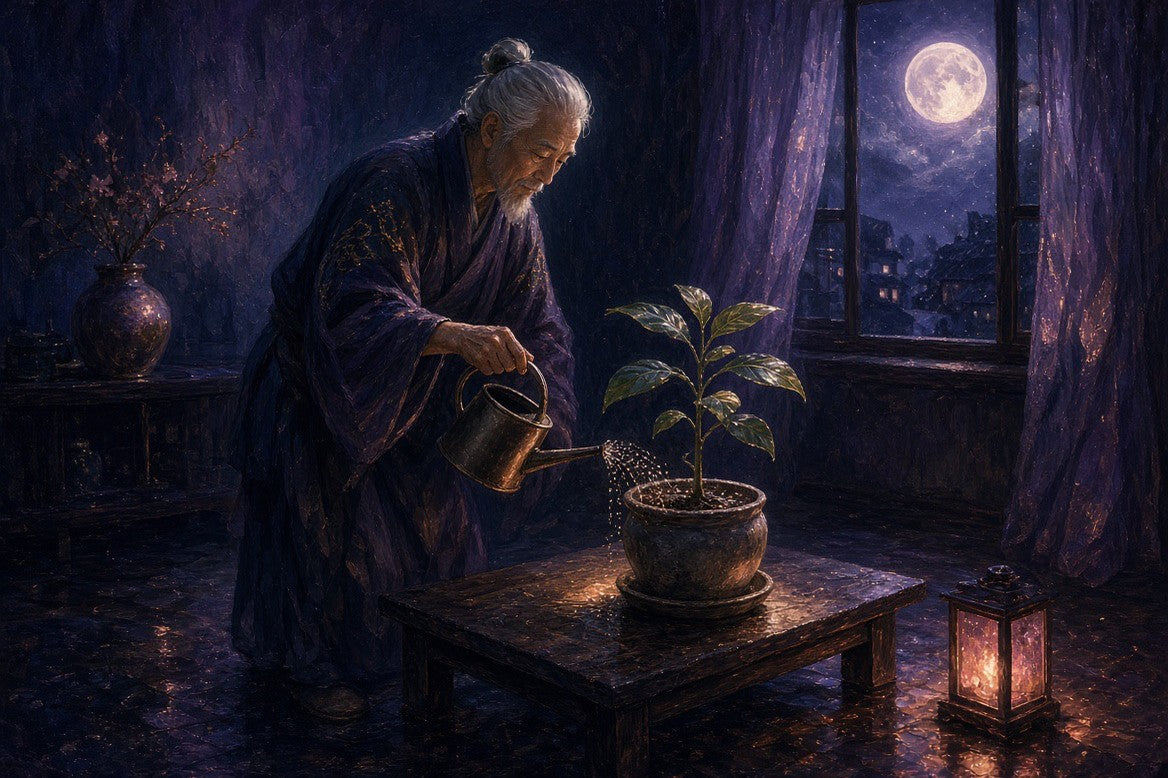
Patience is often mistaken for sitting still while life refuses to cooperate. In practice, patience is an active relationship with time. It asks you to notice what can be done now, what needs more information, and what cannot be forced without causing harm. Daily patience does not erase urgency or excuse poor treatment. It helps you respond with enough space to choose a useful action instead of being pulled by the first impulse.
Notice the first rush
Watch for the body signals that say everything must happen now: tight shoulders, rapid planning, repeated checking, or the urge to send one more message. Naming the rush creates a small pause between sensation and behavior.
Ask what the rush is protecting. Maybe you fear missing an opportunity, disappointing someone, or losing control. The answer may point to a practical step, a boundary, or the need for reassurance.
Separate delay from avoidance
Patience does not mean postponing every uncomfortable task. Choose a clear next action and a time to do it. A planned delay has shape. Avoidance keeps the question vague and growing.
If another person keeps you waiting without information, patience may include asking for clarity or setting a limit. Respect for time is mutual. Staying quiet is not the only patient response.
Practice with small inconveniences
Use ordinary waits as training grounds. Feel your feet in a line, notice the room, or take one slow breath before checking the clock. You are not trying to love the delay. You are practicing not abandoning yourself inside it.
Let small interruptions teach flexibility. A changed route, a slow computer, or a longer conversation can become a chance to choose your tone and attention again.
Trust steady accumulation
Many meaningful changes are too gradual to notice day by day. Keep showing up to the small action, then review after a reasonable interval. Patience needs evidence, not constant inspection.
Celebrate the skill of returning. A patient life is not one without setbacks. It is one that can keep adjusting without turning every setback into a final conclusion.
Let the practice be yours
Patience is not a personality trait reserved for calm people. It is a series of small choices to stay in contact with time, facts, values, and your own capacity.
Notice what changes when you repeat the practice without grading it. A small return, a clearer request, or a little more room around a familiar reaction is useful information. You do not need dramatic proof that the work matters. Let observations guide the next version, and keep the practice flexible enough for real responsibilities, changing seasons, and imperfect days.
It may help to keep a simple record of what you notice: the situation, the first impulse, the choice you made, and what happened afterward. This is not a demand to monitor yourself. It is a way to remember that inner work lives in ordinary details. A short note can reveal that you are pausing sooner, asking for clearer support, or returning to yourself after distraction. Let the record be descriptive rather than judgmental. You are gathering a few landmarks, not building a scorecard.
There will be days when the practice feels generous and days when it feels like one more item on the list. On those days, reduce it to the smallest honest gesture: one sentence, one step, one glass of water, one boundary, or one request for company. Continuity can mean returning after a gap, not performing perfectly without one. If a method makes you afraid to question it, simplify and come back to consent, practical care, and your own discernment.
Let the practice change shape when your capacity changes. A quiet season may call for receiving rather than striving, and a fuller season may invite more exploration. The measure is not how much you can add, but whether the practice helps you meet life with a little more honesty and care.
A small practice to take with you
- Name one signal that you are rushing.
- Choose a clear next action and a time for it.
- Use one ordinary wait as attention practice.
- Review progress after a reasonable interval.
Keep it human
Let steady work be visible even when results are still underground. A seed does not need a daily report to be alive.

Practice waiting without abandoning action or turning delay into a verdict
Patience is not passive approval of every delay. It is the ability to stay in contact with values while timing remains unfinished. Separate what can be done now from what cannot be forced. One clear email, boundary, meal, or rest period may be the honest action available today.
Notice the body of impatience: narrowing attention, rehearsed arguments, compulsive checking, or pressure to decide before enough information exists. Name the signal without obeying it. A pause can protect you from making a permanent choice to escape a temporary feeling.
Tend what is already alive. Water the plant, maintain the skill, return the call, or keep the small promise that does not depend on the desired outcome. This makes waiting participatory. You are not frozen; you are shaping the conditions in which the next answer can arrive.
Let patience include limits. If a situation repeatedly harms you, waiting is not the only spiritual option. Ask what the delay is teaching and what boundary is overdue. Wise patience has a pulse. It can change direction when reality supplies new information.
A small practice loop
- Orient Take one small, reversible step and notice what changes.
- Allow Take one small, reversible step and notice what changes.
- Tend Take one small, reversible step and notice what changes.
- Act Take one small, reversible step and notice what changes.
- Wait Take one small, reversible step and notice what changes.
Let the practice stay human sized. Wonder can sit beside evidence, consent, rest, and practical support. Keep what strengthens agency, revise what does not, and return without punishment. The aim is not a perfect spiritual identity. It is a little more honest contact with the life in front of you.
A grounded way to practice patience as active care
Teach this gently through ordinary evidence before adding a larger spiritual story. Patience is not passive approval of every delay. Orient to what is true, wait long enough to gather useful information, and respond in a way that keeps values and practical limits in view.
Keep the idea flexible enough for consent, changing capacity, practical support, and revision. A useful reflection should increase agency, not urgency, dependence, or pressure to perform a special identity.
Three gentle checks
- Orient: What is true in the room, in the body, and in the actual relationships?
- Wait: What would make the next step smaller, safer, or more honest?
- Respond: What evidence will help you revisit the choice without rushing?
For optional continued learning, visit Free Light Library. You can also explore Angel Numbers Index, Life Path number, and Star Map as prompts for curiosity, never predictions or rules.
A soft next step
If this teaching gave you a useful foothold, you can visit the Free Light Library and join the occasional email reflections there. It is a gentle way to receive another lesson without needing to keep up.
For related reflection, explore Life Path Number and Astrology Star Map. Treat these pages as questions and mirrors, not predictions or rules.
Optional wider perspective
After the teaching, if curiosity still feels steady, you may sample an optional guided perspective on patience as active presence. Keep your judgment, schedule, boundaries, and budget close. This is an invitation, never a requirement.
Explore optional guided perspectives
After the teaching, browse the Infused Lights t-shirt collection if a quiet visual reminder feels useful.
Disclosure: Infused Lights may earn a commission if you start a Gaia membership or purchase through optional links on this page, at no extra cost to you. Teaching comes first. This is educational inspiration, not medical or professional advice.


