


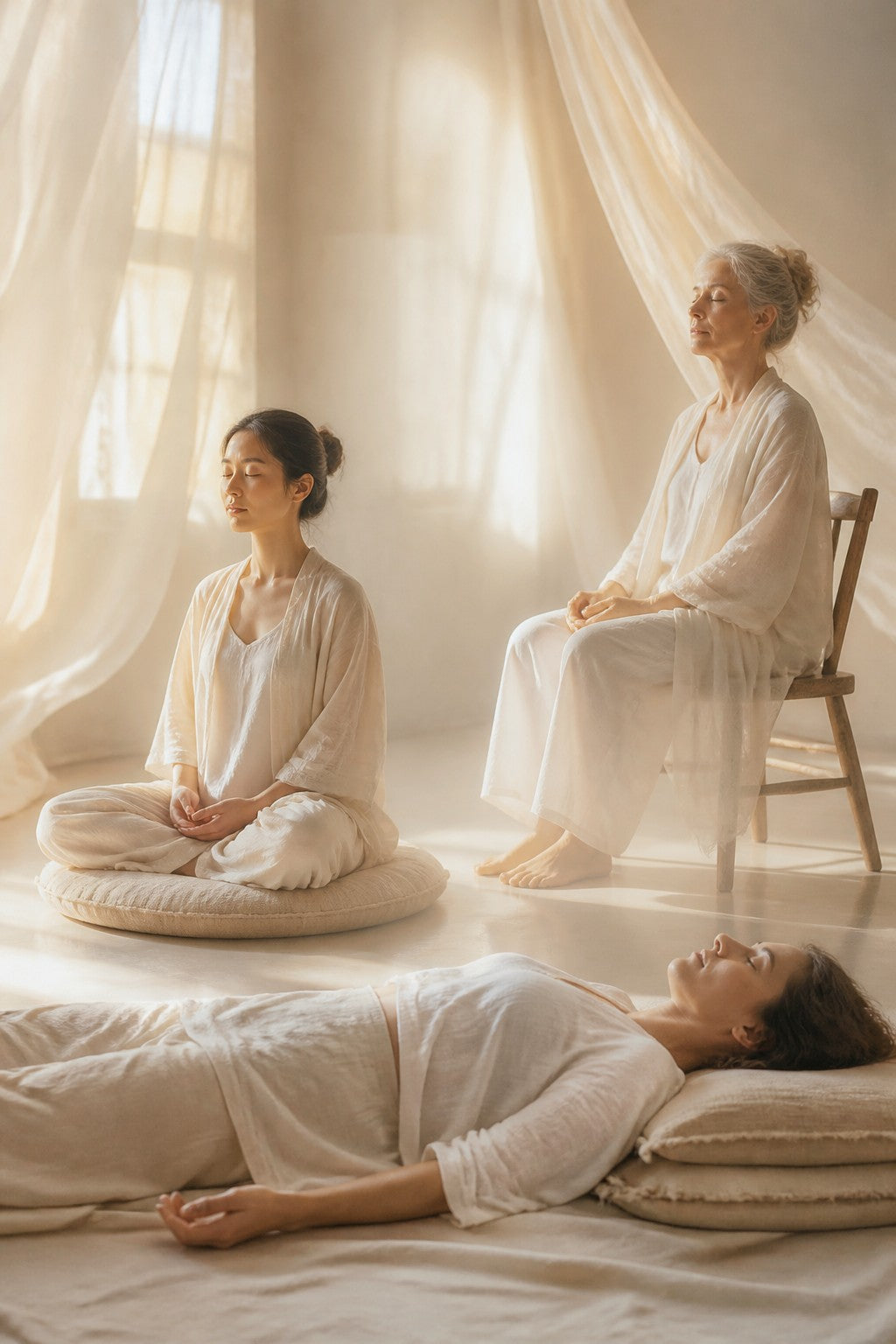
Images of meditation often show someone sitting cross legged on the floor in perfect stillness. For many people, that position is uncomfortable or simply not possible. The good news is that you do not need to sit like that to meditate well. The best meditation posture is one that lets you be both relaxed and alert.
This guide explores several postures, including chair sitting, cushion sitting, kneeling and lying down, with tips for comfort and support. Choose what works for your body today. It may change over time, and that is perfectly fine.

What makes a good posture?
A supportive meditation posture usually has a few qualities:
- Stable. You feel balanced and supported.
- Upright yet relaxed. The spine is gently lengthened without strain.
- Comfortable. You can stay for several minutes without significant discomfort.
- Alert. You can stay awake and attentive.
Different bodies need different solutions. Listen to yours.
Sitting on a chair
Chair sitting is an excellent option for beginners and for anyone with knee, hip or back concerns.
- Choose a firm chair without arms if possible.
- Sit toward the front edge so your back is not leaning on the backrest, or use the backrest if you need support.
- Place your feet flat on the floor, about hip width apart.
- If your feet do not reach, rest them on a cushion or folded blanket.
- Let your hands rest on your thighs or in your lap.
- Gently lengthen through the crown of your head.
- Soften your shoulders and jaw.
Chair meditation is just as valid as floor meditation. Many experienced meditators choose it.
Sitting on a cushion
Sitting on a cushion lifts the hips above the knees, which can make floor sitting more comfortable.
- Place a firm cushion on the floor. A round cushion, often called a zafu, is traditional.
- Sit on the front third of the cushion.
- Let your knees rest on the floor or on additional cushions.
- Choose a comfortable leg position, such as easy pose with legs loosely crossed, or the Burmese position with both feet resting on the floor in front of you, one in front of the other.
- Rest your hands in your lap or on your knees.
- Lengthen your spine and relax your shoulders.
A supportive cushion makes a big difference. Options such as the Premium Buckwheat Meditation Cushion or a round floor cushion can help you find a comfortable height.
Kneeling
Kneeling can be comfortable for people who find cross legged sitting difficult.
- Kneel on a soft surface such as a folded blanket.
- Place a cushion or a meditation bench between your heels and your seat.
- Let your weight rest on the cushion or bench rather than your ankles.
- Keep your spine upright and relaxed.
- Rest your hands on your thighs.
Lying down
Lying down is a wonderful option for relaxation practices, body scans and times when sitting is not possible.
- Lie on your back on a mat, rug or bed.
- Place a pillow under your head if needed.
- Place a pillow under your knees to ease your lower back.
- Let your arms rest by your sides, palms facing up or down.
- Let your feet fall gently outward.
The main challenge with lying down is staying awake. If you tend to fall asleep, try keeping your eyes slightly open or bending one knee. Read Yoga Nidra for Beginners for a practice designed for lying down.
Standing
Standing meditation is less common but can be useful when you feel sleepy or restless.
- Stand with feet hip width apart.
- Soften your knees slightly.
- Let your arms hang naturally.
- Lengthen through your spine.
- Breathe naturally.
Hands
Hand position is a matter of comfort and preference. Common options:
- Resting palms down on thighs for a grounded feeling.
- Resting palms up for an open feeling.
- Resting one hand in the other in your lap.
- Using a mudra, a symbolic hand gesture.
Read Three Simple Mudras for Meditation to explore hand gestures.
Eyes
You can meditate with eyes closed, half open or fully open. Closed eyes reduce visual distraction. Half open eyes with a soft downward gaze can help you stay alert. Choose what feels right.
The head and face
- Let your chin tilt slightly down so the back of your neck lengthens.
- Relax your forehead, eyes and jaw.
- Let your tongue rest gently behind your top teeth.
- Allow a soft, natural expression.
A posture check in
Before each meditation, take a moment to check in:
- Are my feet or knees supported?
- Is my spine gently upright?
- Are my shoulders relaxed?
- Is my jaw soft?
- Are my hands resting comfortably?
Make small adjustments, then settle.
Moving during meditation
It is okay to move. If discomfort arises, you can mindfully adjust your position. Notice the urge to move, then move slowly and with awareness. Meditation is not an endurance test.
Common discomforts
- Numb legs: try a higher cushion or a chair.
- Back ache: use back support or lie down.
- Neck tension: gently lower the chin and relax the shoulders.
- Restlessness: try shorter sessions or walking meditation first.
If discomfort persists, it is wise to speak with a healthcare professional about positions that suit your body.
Creating a comfortable spot
A dedicated meditation spot makes it easier to sit regularly. Keep your cushion, blanket and a small candle or crystal there. Read Create a Simple Meditation Corner at Home.
Changing posture over time
Your needs may change with age, season or energy. Some days you may sit on a cushion, others in a chair or lying down. Flexibility is a strength. What matters most is showing up with attention.
Closing thought
There is no single correct meditation posture. There is only the one that supports you today. Experiment kindly, choose comfort and alertness, and remember that meditation is about presence, not perfection. For more reassurance, read Meditation Myths, Kindly Debunked.
An Infused Lights teaching
Comfort first
Practice: Try sitting in a chair, on a cushion and lying down for two minutes each, and notice which feels most supportive today.
Reflect: What does your body need in order to rest into stillness?
If your body enjoys this, explore our meditation and yoga collection or find a class through the Light Network.
Can we pray for you?
Fill out a request here, and we will gently hold your prayer, intention, or gratitude in light.


