


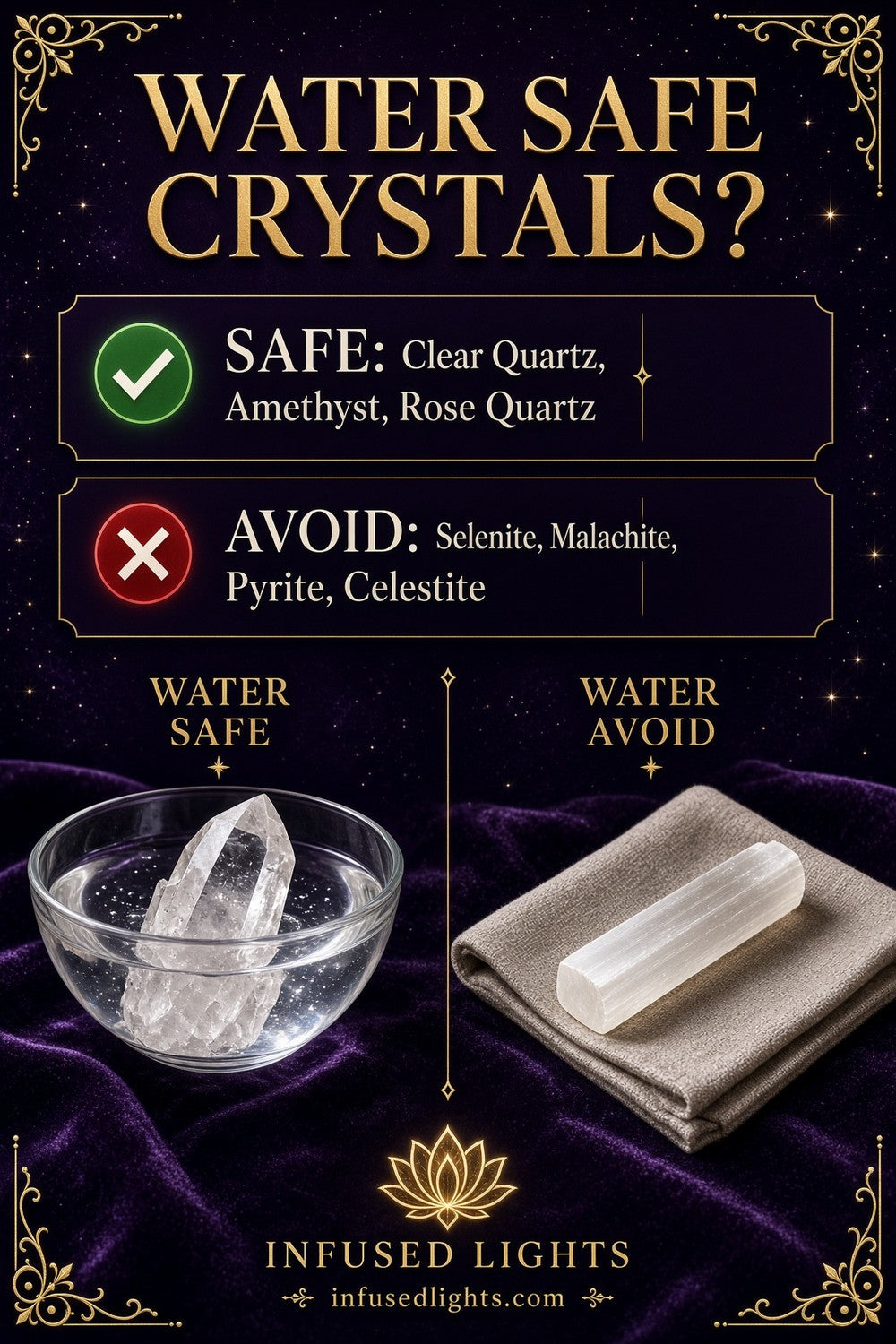
Rinsing a crystal under running water feels refreshing, but not every stone enjoys it. Hardness, porosity and mineral makeup all affect how a crystal responds to water. A little knowledge keeps your collection looking its best for years.
Generally comfortable with water
Most members of the quartz family are hard and stable: clear quartz, amethyst, rose quartz, smoky quartz, citrine, agate, jasper, carnelian and aventurine. A quick rinse and a soft towel dry is usually fine.
Better kept dry
Soft, porous or metallic stones can scratch, crumble, rust or lose their shine: selenite, malachite, pyrite, hematite, lapis lazuli, turquoise, azurite, celestite and kyanite. Cleanse these with moonlight, sound or a selenite plate instead.

Simple habits
- Use cool water, never hot.
- Keep soaks short and dry stones right away.
- Skip salt water for most stones, since salt can pit and dull surfaces.
- If you are unsure, assume dry is best.
Love the idea of crystals and water together? Explore our crystal water bottles, where the stone sits in its own chamber. For more care tips, see How to Cleanse Your Crystals.
Questions people ask
Can I put amethyst in water?
A quick rinse is usually fine, since amethyst is a hard quartz. Keep soaks short and avoid long sunbathing afterward, as bright sun can fade its color.
Is selenite water safe?
No. Selenite is very soft and can dissolve or lose its sheen in water, so cleanse it with moonlight or sound instead.
How can I tell if a stone is porous?
Softer, matte or chalky stones are often porous. If you are unsure of a stone, keep it dry to be safe.
Related reads


Try a free reading: Meet Your Guardian Angel · Chakra Check · Starseed Origin · Lightworker Type · Find a healer or guide in the Light Network
Can we pray for you?
Fill out a request here, and we will gently hold your prayer, intention, or gratitude in light.


