


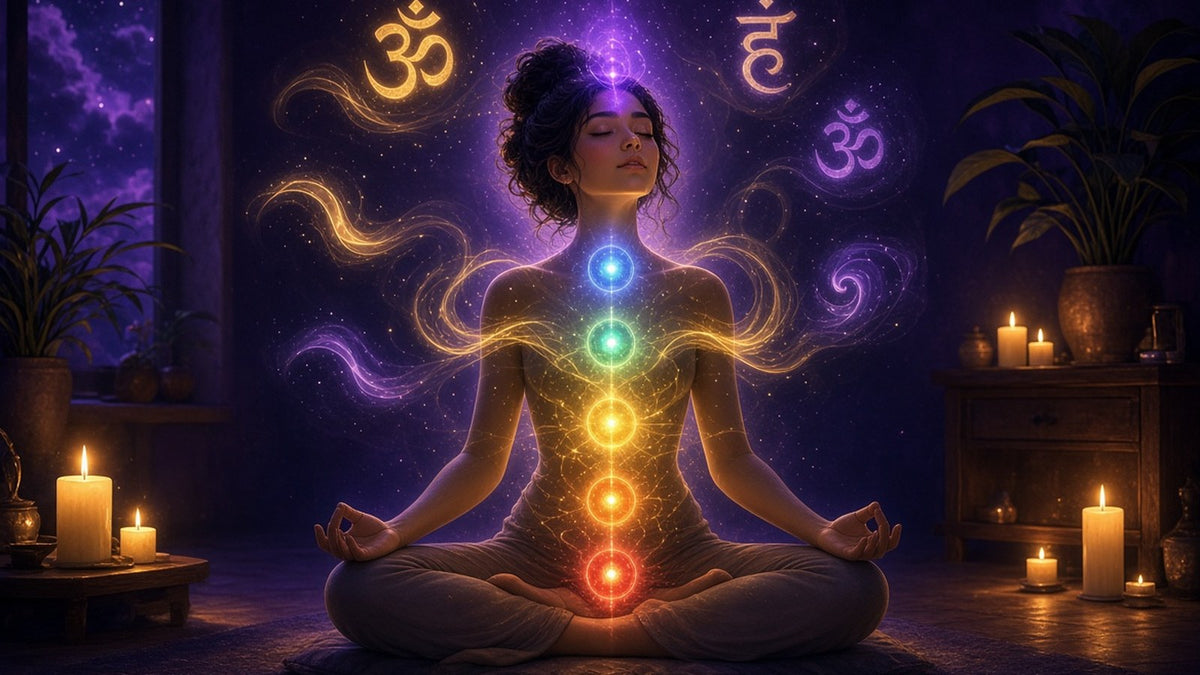
A mantra is a sacred sound, word or phrase repeated to focus and uplift the mind. The Sanskrit word is often explained as man, mind, and tra, tool or protection: a mantra is a tool that carries the mind beyond its usual chatter. Among the simplest and most powerful are the bija, or seed, mantras, single syllables believed to hold the essence of an energy, like a seed holds a tree. In the yoga tradition, each of the main chakras has a seed sound: LAM, VAM, RAM, YAM, HAM and OM, with silence for the crown. Chanting them gently is a beautiful way to feel your body as an instrument of sound.
You do not need a good voice. You only need breath and attention.

The seed sounds of the chakras
- Root: LAM (lahm). Element earth. Feel the vibration in the base of the spine and legs.
- Sacral: VAM (vahm). Element water. Feel it in the lower belly.
- Solar plexus: RAM (rahm). Element fire. Feel it above the navel.
- Heart: YAM (yahm). Element air. Feel it in the chest.
- Throat: HAM (hahm). Element space. Feel it in the throat.
- Third eye: OM (aum). Feel it between the eyebrows.
- Crown: silence, or a soft OM. Rest in stillness above the head.
The "m" at the end is a humming, nasal sound, called anusvara. Let it buzz gently in your lips and head.
About OM
OM, also written AUM, is described in the Mandukya Upanishad as the sound of all that is: A for waking, U for dreaming, M for deep sleep, and the silence after it for pure awareness. Chant it as three parts flowing into one: "Ahhh, ooo, mmm," then rest in the silence.
A simple 10-minute chakra chant
- Sit comfortably with a tall, relaxed spine.
- Breathe three slow breaths.
- Root: chant LAM slowly, 7 times, feeling the base of the spine.
- Sacral: VAM, 7 times.
- Solar plexus: RAM, 7 times.
- Heart: YAM, 7 times.
- Throat: HAM, 7 times.
- Third eye: OM, 7 times.
- Crown: sit in silence for one minute.
- Close with hands on your heart and a breath of gratitude.
You can chant on one comfortable note or let the pitch rise a little for each chakra.
Tips for beginners
- Do not strain. Chant softly. A whisper or a hum is fine.
- Feel more than you hear. Notice where the vibration lands.
- Use a mala of 108 beads for longer practice.
- Learn from teachers and recordings to refine pronunciation.
- Respect the tradition. These sounds come from the living culture of India. Approach them with gratitude.
In The Starseed Chronicles
Mantra the Chant Master treats a chant like lighting a lamp. Kids love chanting LAM, VAM, RAM along with him. Meet them here, or explore The Starseed Chronicles.
A sound companion for this practice
Kundalini: The Energy of Awakening is the second volume of In, Out and Through, joining the guidance of meditation teacher Anna Wise with iAwake's relaxing music and sound technology. It invites a journey of light toward higher perspectives and expanded awareness.

Explore Kundalini: The Energy of Awakening at iAwake
Disclosure: This is an affiliate link for iAwake Technologies. If you purchase through it, Infused Lights may earn a commission at no extra cost to you. Sound tools are optional companions to your practice, not medical or professional advice.
From the Infused Lights crystal shop
Many people hold a chakra bracelet like a simple mala while chanting.


Browse all Crystals and Stones. Crystals and tools are offered as reminders for reflection and intention, not as medical care.
Go deeper with Nada Yoga: Meditating on Your Inner Sound and Sound Healing and Why Tone Helps.
Part of The Light and Sound Series
- Light as Soul Food: Sunrise, the Pineal Gland and a Morning Light Ritual
- Color Energy: What Each Color Does for Your Mood and Aura
- Mantra for Beginners: The Sanskrit Seed Sounds and How to Chant Them (you are here)
- Nada Yoga: Meditating on Your Inner Sound
- Palming and Sunning: Old Relaxation Practices for Tired Eyes
- A 5-Minute Heart Coherence Practice
Read next
Companion readings chosen for this same theme.

With love and light,
Infused Lights
Can we pray for you?
Fill out a request here, and we will gently hold your prayer, intention, or gratitude in light.


