


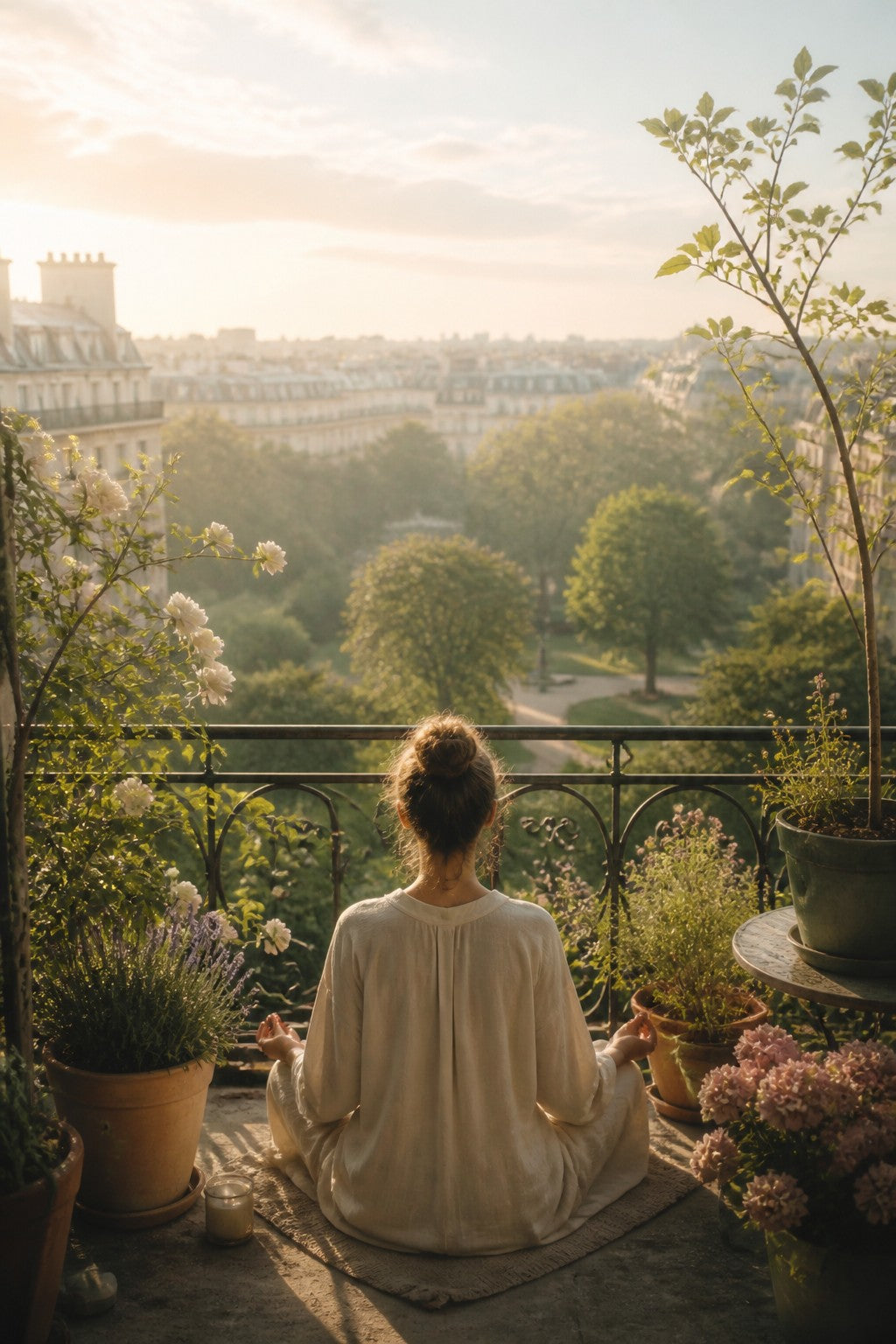
Meditation is often practiced indoors, in quiet rooms and on cushions. Yet stepping outside can bring a whole new dimension to the practice. Fresh air, natural light, birdsong and the movement of leaves all invite you into the present moment. Many people find that meditating outdoors feels more alive and less effortful.
This guide offers practical tips for seated outdoor meditation, whether you have a garden, a balcony, a nearby park or simply a window ledge. It includes a simple sensory practice and ideas for different seasons.

Why meditate outdoors?
Outdoor meditation offers:
- Natural anchors. Wind, sounds and light give the mind gentle points of focus.
- Fresh air. Many people simply feel more refreshed outside.
- Connection. Sitting with trees, sky and earth can bring a sense of belonging.
- Variety. Every session is a little different as weather and seasons change.
For reflections on what nature can teach us, read Nature as a Teacher.
Choosing a spot
Look for a place that feels safe, comfortable and reasonably quiet. Options include:
- Your garden or backyard.
- A balcony or patio.
- A bench in a park.
- A quiet spot under a tree.
- A beach or lakeside.
- A rooftop or open window.
Consider safety and privacy. Choose a place where you feel at ease closing your eyes, or keep them open if you prefer.
What to bring
Keep it simple:
- A small cushion, folded blanket or portable seat.
- Layers of clothing for changing temperatures.
- Water.
- Sun protection or a hat.
- A timer, such as your phone on silent.
A seated outdoor practice
Arriving
- Sit comfortably with your back upright but relaxed.
- Feel the ground or seat beneath you.
- Take three slow breaths.
- Notice that you are outside.
Feeling the air
- Notice the temperature of the air on your skin.
- Notice any breeze. Where do you feel it?
- Notice the air entering your nose as you breathe.
Listening
- Open your attention to sounds.
- Notice birds, wind, leaves, water, voices, traffic.
- Let each sound arrive and fade without judging it.
Seeing
- If your eyes are open, let your gaze rest softly on something natural, such as a tree, the sky or grass.
- Notice colors, shapes, light and movement.
- If your eyes are closed, notice the light through your eyelids.
Feeling the earth
- Bring attention to the places where your body meets the ground or seat.
- Imagine roots growing gently down from your body into the earth.
- Feel supported and steady.
Resting
- Let all of these experiences be present at once.
- Rest in simple awareness for a few minutes.
Closing
- Take a deep breath.
- Offer silent thanks to the place where you sat.
- Stand slowly and stretch.
Working with distractions
Outdoor spaces are rarely silent. People walk by, dogs bark, cars pass. Rather than seeing these as interruptions, include them in your awareness. Each sound can become part of the meditation. Read Open Awareness Meditation for more on this approach.
Insects and weather
Nature brings surprises. A bug may land on your hand. The sun may come out or go behind clouds. A light rain may begin. Notice your reactions with curiosity. If you become uncomfortable, it is fine to adjust, move or go inside.
Seasonal ideas
Spring
Notice new growth, fresh scents and longer days. Sit near budding trees or flowers.
Summer
Meditate early or late in the day to avoid heat. Find shade. Notice warmth and long evening light.
Autumn
Notice falling leaves, cooler air and changing colors. Listen to the rustle beneath your feet.
Winter
Bundle up and keep sessions short. Notice crisp air and quiet. Read about seasonal rhythms in Chakras Through the Seasons.
Balcony and window meditation
If you live in a city or cannot easily get outdoors, a balcony or open window works well. Sit near the window, feel the air, watch the sky and listen to the life of the city. Even a small view of sky or a single plant can bring nature into your practice.
Bringing a crystal outside
Some people enjoy bringing a small crystal outdoors. Holding a stone while sitting on the earth can feel especially grounding. A sturdy, pocket friendly stone such as Black Tourmaline Raw is easy to carry. Just remember to take it home with you afterward.
Combining with walking
You might begin with a short walk to settle, then sit for your meditation. Walking first can help release restlessness. Read Walking as Moving Meditation.
Meditating with a friend outdoors
Outdoor meditation can be lovely to share. Invite a friend to sit with you in a park or garden. Agree on a time, perhaps ten minutes, and sit quietly side by side. Afterward, share what you each noticed. You may be surprised by how differently two people experience the same place. A friend can also help you feel more comfortable meditating in a public space.
Short outdoor pauses
You do not always need a full session. Step outside for a minute, feel the air, look at the sky and take three slow breaths. These brief outdoor pauses can refresh you during a busy day and keep you connected to the natural world.
Leaving no trace
When meditating outdoors, respect the environment. Leave the space as you found it. Avoid disturbing plants or wildlife. Take any belongings and litter with you.
A weekly outdoor ritual
Consider choosing one day each week for an outdoor meditation. Over time, you will notice how your spot changes with the seasons. This can become a deeply grounding ritual and a beautiful way to feel connected to the natural world.
Closing thought
The outdoors offers a living meditation space. Each breeze, birdsong and shift of light invites you into presence. Find a spot, sit down and let nature guide your attention. You may discover a new kind of peace under the open sky.
Can we pray for you?
Fill out a request here, and we will gently hold your prayer, intention, or gratitude in light.


