


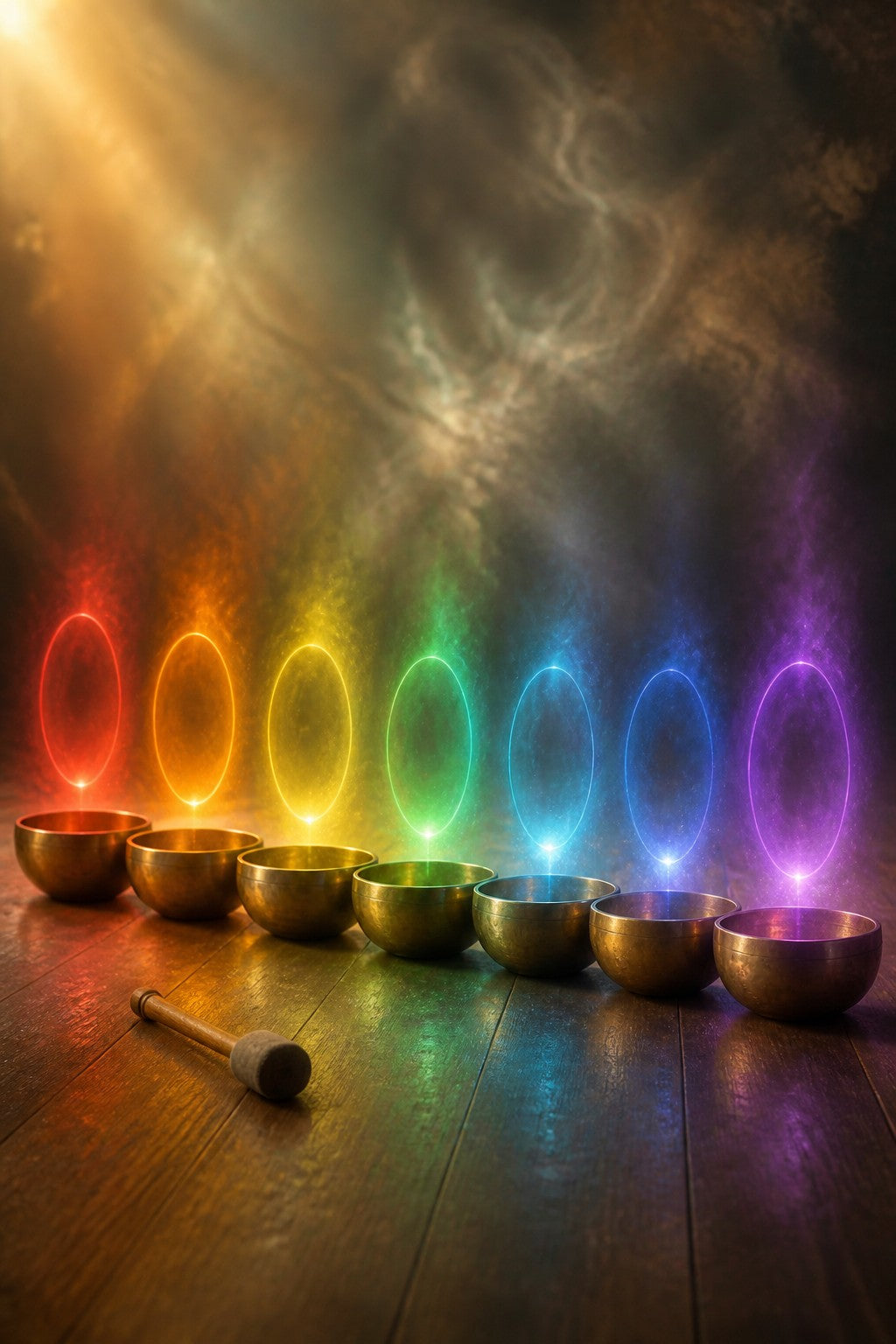
If you have ever shopped for a crystal singing bowl, you have probably seen labels like "Note C, Root Chakra" or "Note F, Heart Chakra." These pairings are common in modern sound practice, and they can be a lovely way to bring the chakra system into a listening meditation.
This guide explains what these note pairings are, where they come from, how to approach them with an open but grounded mind, and how to use bowls in a simple chakra sound practice at home.

The common pairing
In many contemporary sound practices, the seven notes of a major scale are paired with the seven chakras, rising from root to crown:
- C: root chakra.
- D: sacral chakra.
- E: solar plexus chakra.
- F: heart chakra.
- G: throat chakra.
- A: third eye chakra.
- B: crown chakra.
This pattern mirrors the familiar rainbow ladder of chakra colors, moving upward from low to high.
Where this pairing comes from
It is worth being honest here. The ancient texts that describe the chakras do not assign Western musical notes to them. The note pairing is a modern idea, developed within contemporary sound and wellness communities. It is a helpful framework, an elegant way to map a seven step scale onto a seven step energy system.
Holding it this way lets you enjoy the practice without needing to believe it is ancient or scientific. You can also explore older sound traditions associated with the chakras, such as the Sanskrit seed syllables, in Mantra for Beginners.
Why sound practice feels meaningful
Many people find that listening to a sustained tone helps the mind settle. A single bowl note gives attention a simple place to rest. As the sound slowly fades, it invites you to follow it into quiet. The gentle science and wonder of tone is explored more fully in Sound Healing and Why Tone Helps.
When you pair each note with a chakra, the practice becomes a structured journey through the body, from the base of the spine to the top of the head, with sound as your guide.
Do you need all seven bowls
No. A full set is beautiful, but many people begin with one bowl. Choose the center you feel most drawn to, or simply choose the tone that sounds most pleasant to you.
A single root bowl in the note of C is a popular starting point because low tones often feel grounding. The 12 Inch White Frosted Crystal Singing Bowl in C4 is a good example of a root tone bowl that fills a room with a deep, steady sound.
You can also practice with a metal Tibetan style bowl, which produces a rich blend of tones rather than a single clear note. The chakra pairing applies less precisely, but the listening practice is just as lovely.
A simple single bowl chakra practice
Even with one bowl, you can move through all seven centers using attention.
- Sit comfortably with the bowl in front of you or resting on your palm if it is small.
- Strike or rim the bowl gently. If you are new to playing, read How to Play a Singing Bowl first.
- As the sound rings, bring your attention to the base of your spine. Imagine the color red. Breathe slowly until the sound fades.
- Play again. Move your attention to the lower belly and the color orange.
- Continue upward: the stomach and yellow, the chest and green, the throat and blue, the brow and indigo, the top of the head and violet.
- After the seventh tone, sit in silence for one minute.
This takes about ten minutes and requires only one instrument.
A full set practice
If you have a set of seven bowls, arrange them in a line or arc from lowest to highest note. Play each bowl in turn from root to crown, letting each sound fade fully before moving on. Some people like to then play back down from crown to root, ending with a grounding tone.
Keep your playing soft. Crystal bowls can be surprisingly loud in a small room. A gentle strike often produces the most beautiful sound.
Tips for a calm sound practice
- Volume matters. Play softly, especially in small rooms or with sensitive listeners.
- Silence is part of the music. Let each tone fade fully before the next.
- Stay comfortable. If any sound feels too intense, move farther away or stop.
- Keep it short. Ten minutes is plenty for a home practice.
- Ground afterward. Drink water, feel your feet, or take a short walk.
Caring for crystal bowls
Crystal bowls are made of quartz and are fragile. Place them on a soft ring or cushion, never directly on hard surfaces. Clean them with a soft damp cloth. Avoid sudden temperature changes, and never stack them unless they are designed for nesting. Store them in padded cases when traveling.
Sharing sound with others
A home sound session can be a beautiful way to spend time with friends or family. Keep it simple: dim the lights, invite everyone to lie down or sit comfortably, and play softly through the seven tones. Our guide Sound Bath at Home: A Simple Version offers a full structure for this kind of gathering.
An honest note
Sound practice is a gentle wellness ritual, not a medical intervention. Many people find it relaxing and centering, and that is a real gift. If you have sensitivities to sound, start quietly and listen to your body.
Closing thought
The pairing of notes and chakras is a modern bridge between two beautiful ideas: music and the inner map of energy. Whether you use one bowl or seven, the practice invites you to listen deeply, follow each tone into silence, and travel gently through your whole self.
For more chakra guides, visit What Chakras Actually Are in Plain Language and the Free Light Library.
Can we pray for you?
Fill out a request here, and we will gently hold your prayer, intention, or gratitude in light.


