


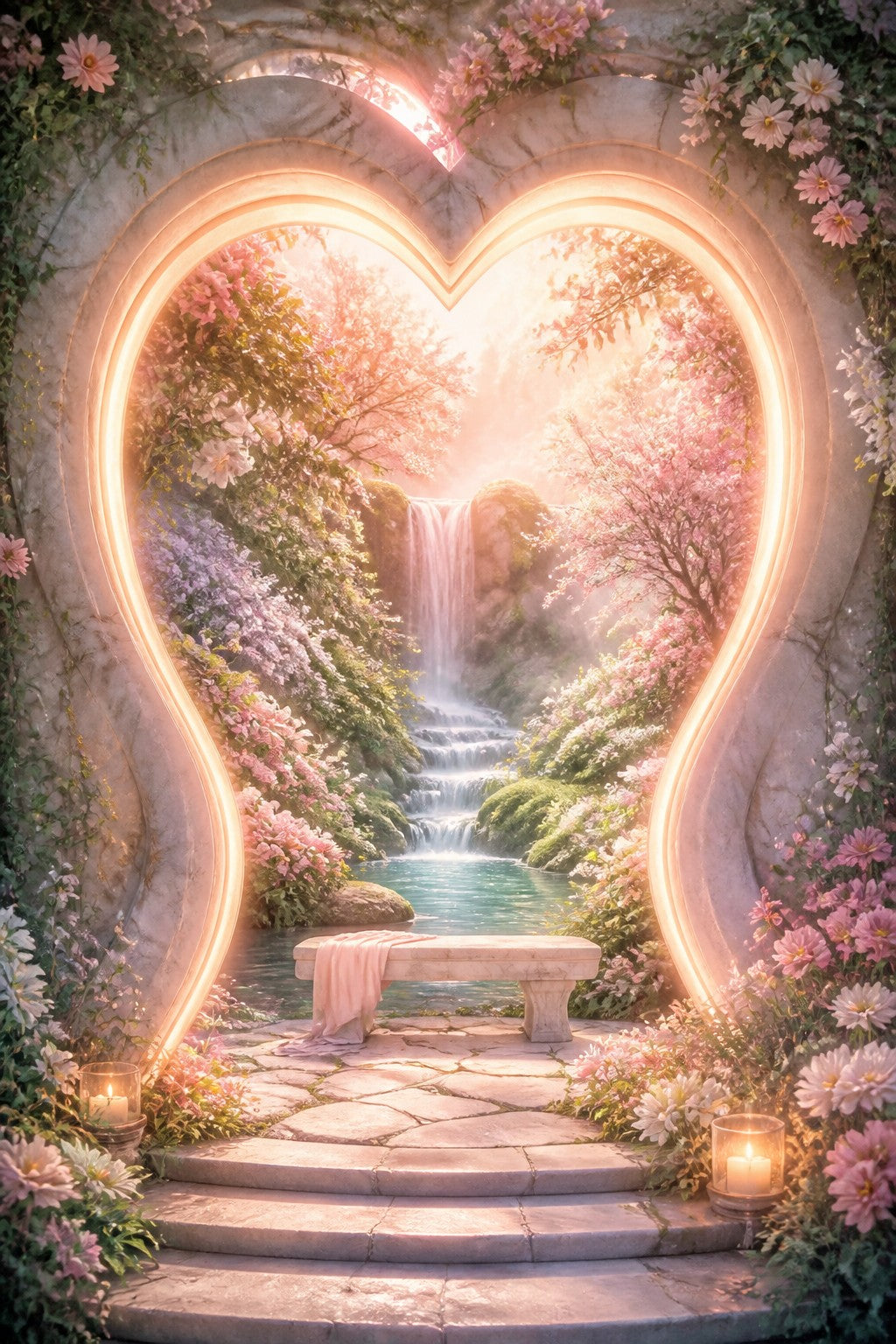
Imagine having a peaceful place you could visit any time, no matter where you are. A place that feels safe, beautiful and calm. In meditation, this is often called an inner sanctuary. It is a space you create in your imagination and return to whenever you need rest or reassurance.
Inner sanctuary meditation is a gentle visualization practice suitable for beginners. It can be especially comforting for imaginative people, sensitive souls and anyone who finds silent meditation challenging. This guide offers a step by step practice and ideas for making your sanctuary uniquely yours.

What is an inner sanctuary?
An inner sanctuary is a mental image of a peaceful place. It might be based on somewhere real, like a beach you love, or it might be entirely imagined, like a crystal cave or a garden among the stars. What matters is that it feels calm and safe to you.
Over time, as you visit your sanctuary regularly, it can become a familiar and comforting place. Simply bringing it to mind may help you relax.
Why visualization helps
Visualization engages the imagination, which can make meditation feel more vivid and inviting. For people whose minds like to wander, giving the mind a pleasant image to explore can be easier than focusing on the breath alone. Visualization is also used in many creative and reflective practices. Read 4 Creative Visualization Exercises That Work for more ideas.
Preparing
- Find a quiet place where you will not be disturbed for ten to fifteen minutes.
- Sit or lie down comfortably.
- Dim the lights or light a candle.
- Close your eyes.
- Take several slow, deep breaths.
The guided practice
Settling
Feel your body supported by the chair, cushion or floor. Let your shoulders soften. Let your breath slow down naturally. With each exhale, imagine releasing a little tension.
Finding the path
Imagine a path in front of you. It might be a forest trail, a sandy path, a staircase or a bridge of light. Notice what it looks like. Begin to walk along it slowly. With each step, you feel a little more relaxed.
Arriving
The path leads you to your sanctuary. Take a moment to look around. What do you see? It might be:
- A quiet meadow full of flowers.
- A peaceful beach with gentle waves.
- A cozy cabin with a crackling fire.
- A crystal cave glowing with soft light.
- A garden floating among the stars.
There is no wrong answer. Let your sanctuary appear naturally.
Exploring with the senses
Notice details using all your senses:
- Sight: colors, light, shapes.
- Sound: birds, water, wind, silence.
- Touch: grass under your feet, warm sunlight, cool air.
- Smell: flowers, sea air, pine.
- Taste: perhaps fresh water or sweet fruit.
The more detail you notice, the more real your sanctuary may feel.
Resting
Find a comfortable place to sit or lie within your sanctuary. Rest there. Breathe. Feel the peace of this place filling you. Stay as long as you like.
Receiving
Some people like to ask, "Is there anything I need to know?" and wait quietly. A word, image or feeling may arise, or nothing at all. Either is fine. Simply rest.
Returning
When you are ready, thank your sanctuary. Know that you can return anytime. Walk back along the path. Gradually become aware of your body, the room and the sounds around you. Wiggle your fingers and toes. Take a deep breath and open your eyes.
Making your sanctuary your own
Your sanctuary can change and grow over time. You might add:
- A comfortable seat or bed.
- A pool of clear water.
- A favorite tree.
- A crystal altar.
- A gentle animal companion.
- A door that leads to other peaceful places.
Some people imagine a wise guide or loving presence who meets them there. Others prefer to be alone. Follow what feels right.
Using your sanctuary in daily life
Once you know your sanctuary well, you can visit it briefly during the day:
- Before a stressful event, close your eyes and picture it for a few breaths.
- When trying to fall asleep, imagine lying down in your sanctuary.
- During a break, remember one detail, like the sound of waves.
Pairing with a crystal
Holding a crystal can help anchor the visualization. Some people imagine their crystal appearing in their sanctuary too. A calming stone such as amethyst is a popular choice. The Dream Amethyst Crystal Sphere offers a smooth, rounded shape that is pleasant to hold during visualization. Read Crystal Meditation for Beginners.
Inner sanctuary for children
Children often enjoy this practice. Invite them to imagine their own special place and describe it to you. They might draw it afterward. Keep it playful and short.
When visualization is hard
Not everyone sees vivid mental images, and that is completely normal. If images do not come easily, focus on feelings or sounds instead. You might simply sense warmth, peace or safety. Your sanctuary can be a feeling rather than a picture.
If any image ever feels uncomfortable, open your eyes and return to the room. You are always in control of the practice.
A gentle evening version
Inner sanctuary meditation can be part of a calming evening routine. Lie in bed, picture your sanctuary and rest there as you drift toward sleep. Read A Gentle Evening Wind Down Ritual for more ideas.
Journaling afterward
After your meditation, you might write about your sanctuary:
- What did it look like?
- How did it feel?
- What details surprised me?
- What would I like to add next time?
Over time, your journal becomes a map of your inner peaceful place.
Closing thought
Your inner sanctuary is always with you. No matter how busy or noisy life becomes, you can close your eyes and return to a place of peace. Visit often, explore gently and let it become a source of calm and comfort on your path.
Can we pray for you?
Fill out a request here, and we will gently hold your prayer, intention, or gratitude in light.


